





Giving Property to Family in Louisiana Without a Sale
Key Takeaways: An act of donation is the Louisiana legal document used to transfer immovable property as a gift rather than a sale, treated by La. Civ. Code art. 1468 as a donation inter vivos. To be valid, the transfer must be made by authentic act before a notary, be accepted in writing by the donee during the donor’s lifetime under La. Civ. Code art. 1544, and be recorded in the parish conveyance records. La. R.S. 35:199(A)(1) directs the notary to record the instrument within fifteen days with the Terrebonne Parish recorder. Donors can reserve a usufruct while transferring naked ownership to keep living in the property or collecting its income. Donations are irrevocable except in narrow circumstances such as ingratitude or nonperformance of conditions. Common pitfalls include generic online forms, missing written acceptance, incomplete legal descriptions, community property consent issues, unresolved mortgages, forced heirship exposure, and overlooked gift tax and capital gains basis consequences.
An act of donation is the legal document Louisiana uses to transfer ownership of land, a house, or other immovable property as a gift. Louisiana’s Civil Code treats this as a donation inter vivos, defined in La. Civ. Code art. 1468 as a contract by which a donor gratuitously divests himself, at present and irrevocably, of the thing given in favor of a donee, who accepts it. For families in Houma and across Terrebonne Parish, it is one of the most common ways parents pass a camp, family home, or acreage to a child during their lifetime. Done correctly, it creates a clean title transfer; done carelessly, it can create clouded title and unintended tax consequences.
If you are considering gifting property to a loved one, the attorneys at Damon J Baldone & Associates can walk you through the requirements. Call 985-868-3427 or contact us now to discuss your situation.
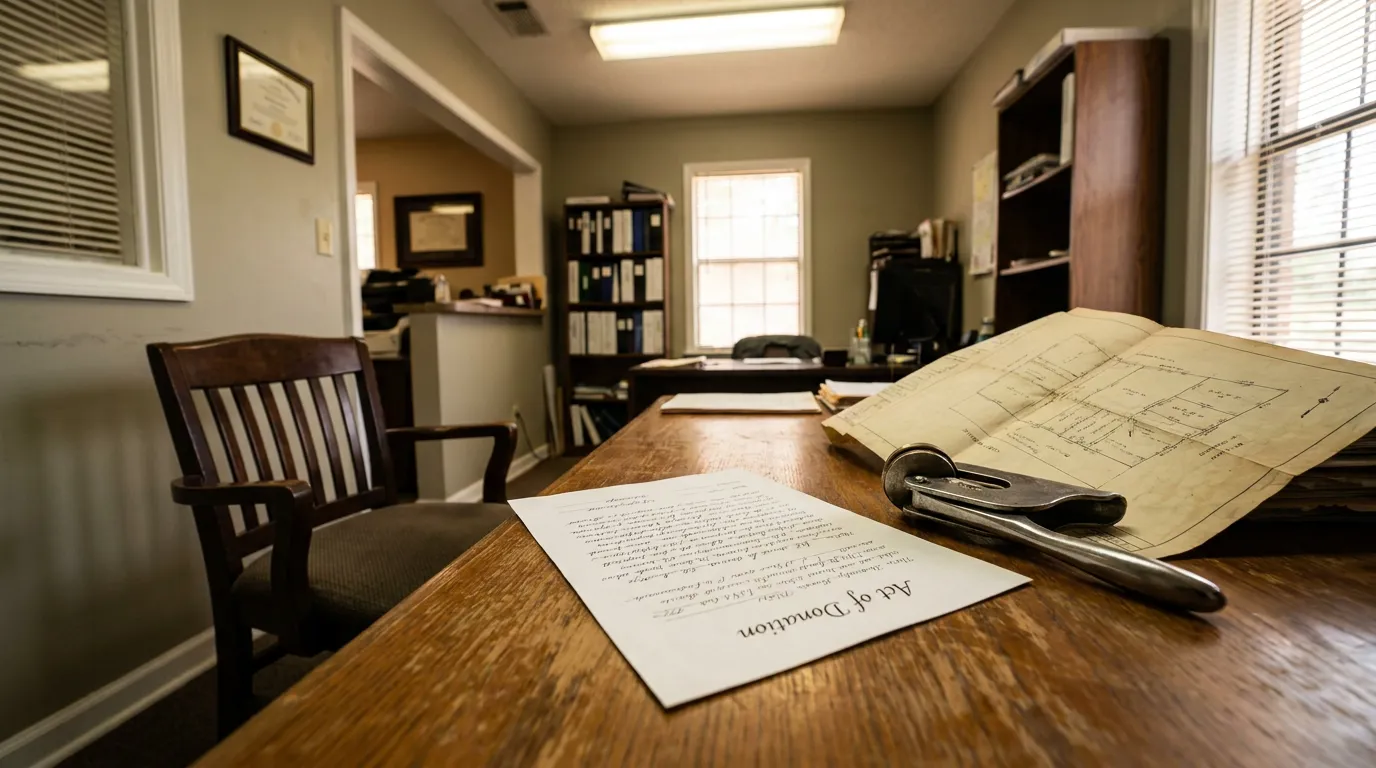
Where the Act of Donation Fits in Louisiana Property Law
Louisiana law recognizes several ways ownership changes hands, and gratuitous transfer by agreement is one of them. The Civil Code addresses the transfer of ownership by agreement in articles 517 through 525. Unlike a sale, no price is paid, which is why the Code imposes stricter formalities.
The property being given must qualify as immovable property under the Code. Louisiana separates immovables, addressed in La. Civ. Code arts. 462 through 470, from movables, addressed in arts. 471 through 475. Tracts of land, buildings, and their components are generally immovable, while vehicles, furniture, and cash are movable. That distinction matters because the form and acceptance rules differ depending on the category.
Donations Are Contracts, Not Just Paperwork
Since a 2009 revision, the Civil Code expressly characterizes a donation inter vivos as a contract. Framing the donation as a contract reinforces that both consent of the donor and acceptance by the donee are required elements.
Pure, Onerous, and Remunerative Donations
Not every transfer labeled a gift stays inside the donation rules. Under La. Civ. Code art. 1526, a transfer burdened with an obligation imposed on the donee that results in a material advantage to the donor is not governed by the rules peculiar to donations inter vivos, unless the cost of performing that obligation is less than two-thirds of the value of the thing donated.
The Core Requirements of an Act of Donation Louisiana Immovable Property Transfers Must Meet
A valid gift of land requires proper form, a valid object, acceptance by the donee, and recordation.
- Form: A donation of immovable property must be made by authentic act, meaning it is passed before a notary and two witnesses. Failure to observe that form results in absolute nullity.
- Object: The thing donated must be a present thing the donor owns, or a real right in it. There is no donation of future property.
- Acceptance: The donee must accept in writing during the donor’s lifetime.
- Recordation: The instrument must be filed in the conveyance records of the parish where the property sits to affect third parties.
Acceptance is not a technicality; it is what gives the donation legal life. Under La. Civ. Code art. 1544, a donation inter vivos is without effect until it is accepted by the donee, and the acceptance shall be made during the lifetime of the donor. Acceptance may be made in the act of donation itself or subsequently in writing. For corporeal movables, delivery can substitute for written acceptance, but that shortcut does not exist for land.
💡 Pro Tip: The cleanest practice is to have the donee sign the same act of donation the donor signs. Separate later acceptances are permitted in writing, but they create a window in which the donor could die and the donation could fail.
Recording the Act in Terrebonne Parish
Recording is what makes the transfer effective against the rest of the world. Under La. R.S. 35:199(A), notaries public shall record all acts of sale, exchange, donation, and mortgage of immovable property. For immovables outside Orleans Parish, La. R.S. 35:199(A)(1) directs that the notary shall record the instrument within fifteen days with the appropriate recorder of the parish where the property is situated.
For Houma-area property, that means filing with the Terrebonne Parish clerk of court’s conveyance records. Louisiana’s public records doctrine means an unrecorded transfer, while binding between donor and donee, has no effect as to third persons. Anyone reviewing the state’s notary public law under Title 35 will see how seriously the recording duty is treated.
| Element | Immovable Property (Land, Home) | Movable Property |
|---|---|---|
| Typical form | Authentic act before a notary | Less formal in many cases |
| Acceptance | Must be in writing, in the act or later | Corporeal possession can suffice |
| Timing of acceptance | During the donor’s lifetime | During the donor’s lifetime |
| Recording | Filed with the parish recorder | Generally not recorded |
Reserving a Usufruct and Keeping Control
Many donors want to give the property away but continue living in it or collecting its income. Louisiana’s personal servitude rules, found in La. Civ. Code arts. 533 through 645 with usufruct addressed in arts. 535 through 629, allow a donor to reserve a usufruct while transferring naked ownership. This is common when a parent donates the family home to a child but intends to stay there for life.
Reserving a usufruct changes the practical reality of the gift. The naked owner holds title but generally cannot occupy the property or convey it free of the usufruct while it lasts. A usufruct over a nonconsumable is typically extinguished at the usufructuary’s death. Our discussion of usufruct protections for spouses explains how the right operates in estate plans.
When a Donation Can Be Undone
Irrevocability is the general rule, but it is not absolute. Under La. Civ. Code art. 1556, a donation may be revoked for ingratitude of the donee, and it may be dissolved for nonfulfillment of a suspensive condition or nonperformance of imposed conditions or charges. Revocation for ingratitude is limited to narrow grounds such as an attempt on the donor’s life or cruel treatment, crimes, or grievous injuries, and the action must generally be brought within one year. Courts interpret these grounds narrowly, so donors should not assume a gift can be pulled back simply because a relationship sours.
Common Pitfalls Houma Property Owners Run Into
Most problems with donations surface years later, when someone tries to sell or mortgage the property. A Houma real estate attorney reviewing the transfer beforehand can identify issues while they are still fixable.
- Using a generic online form that does not satisfy Louisiana’s authentic act requirements
- Omitting a written acceptance, or attempting acceptance after the donor’s death
- Describing the property by street address instead of a full legal description
- Failing to address community property consent when the donor is married
- Overlooking forced heirship, because donations that impinge on a forced heir’s legitime may later be subject to collation or reduction
- Ignoring federal gift tax reporting obligations for transfers above the annual exclusion
- Donating property that secures an existing mortgage without reviewing the loan terms
💡 Pro Tip: Pull a current title search before donating. If there is an old succession, a tax lien, or an unreleased mortgage in the chain, a donation will carry that problem forward rather than clean it up.
Tax consequences deserve separate attention from a qualified tax adviser. Louisiana no longer imposes a state gift tax, but a lifetime gift generally carries over the donor’s income tax basis instead of receiving the basis adjustment available for property acquired from a decedent, which can increase capital gains exposure when the donee eventually sells. The applicable rules found in the Louisiana Civil Code online govern the transfer itself, not its federal tax treatment.
Frequently Asked Questions
1. Does an act of donation avoid succession for that property?
Property validly donated during the donor’s lifetime and properly recorded is no longer owned by the donor at death, which can simplify administration. However, the effect depends on whether the donation met all formal requirements, whether any reserved rights remain, and whether the gift is subject to collation or reduction in favor of forced heirs.
2. Can I donate property to more than one person?
Yes. A donor may transfer undivided interests to multiple donees, and each donee must accept during the donor’s lifetime. Co-ownership creates management and partition issues that should be considered carefully.
3. What happens if the donee never signs anything?
Under La. Civ. Code art. 1544, the donation is without effect until accepted during the donor’s lifetime. If no written acceptance was ever made and the donor has died, the transfer generally fails.
4. Is a notarized document enough, or does it have to be recorded?
Both matter. The authentic act addresses validity between the parties, while recording addresses effectiveness against third persons. Under La. R.S. 35:199, the notary also carries a recording duty for donations of immovables.
5. Can I donate property I still owe money on?
Possibly, but the mortgage follows the property, and many loan documents contain due-on-transfer clauses. Reviewing the note and mortgage before executing a donation is strongly advisable.
Getting the Transfer Right the First Time
An act of donation is a powerful tool for moving Terrebonne Parish property to the next generation, but Louisiana’s formalities leave little room for improvisation. Between the authentic act requirement, the donee’s written acceptance during the donor’s lifetime under La. Civ. Code art. 1544, the fifteen-day notarial recording duty in La. R.S. 35:199(A)(1), and the option of reserving a usufruct, each decision shapes what the donee actually receives. The right structure depends on the property, the relationships, and the broader estate plan.
Before you sign a gratuitous transfer of land, let Damon J Baldone & Associates review the document and the title. Call 985-868-3427 or schedule a consultation to make sure your act of donation Louisiana immovable property transfer holds up for years to come.